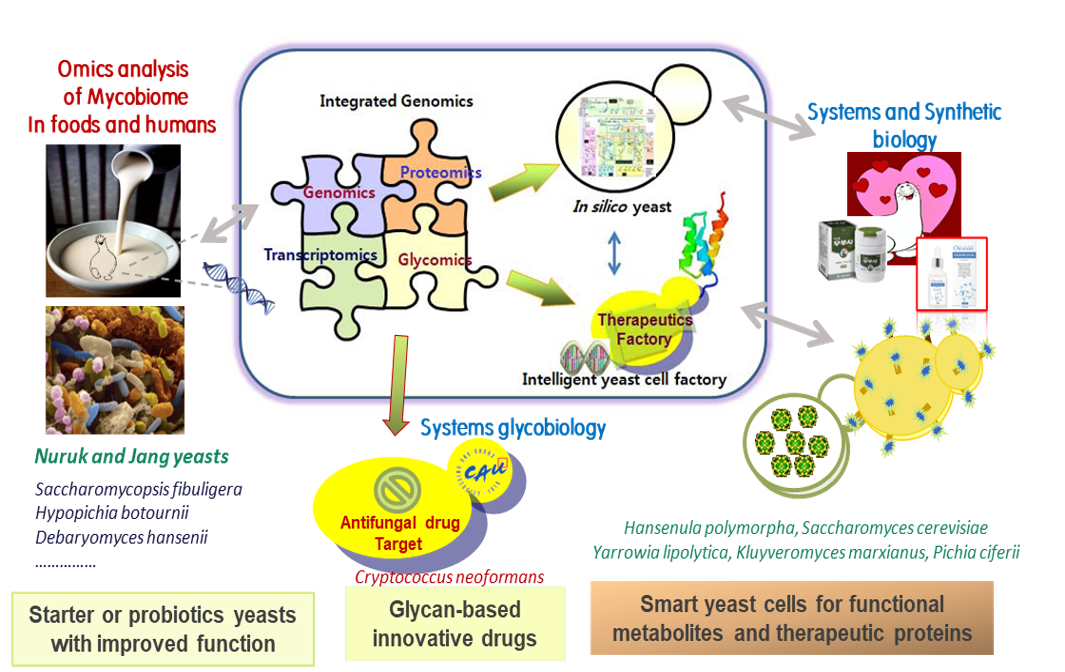
We use omics approaches, such as genomics, transcriptomics, proteomics and glycomics, to understand yeast species at a systems biology level in order to develop technologies beneficial to the industrial and medical fields.
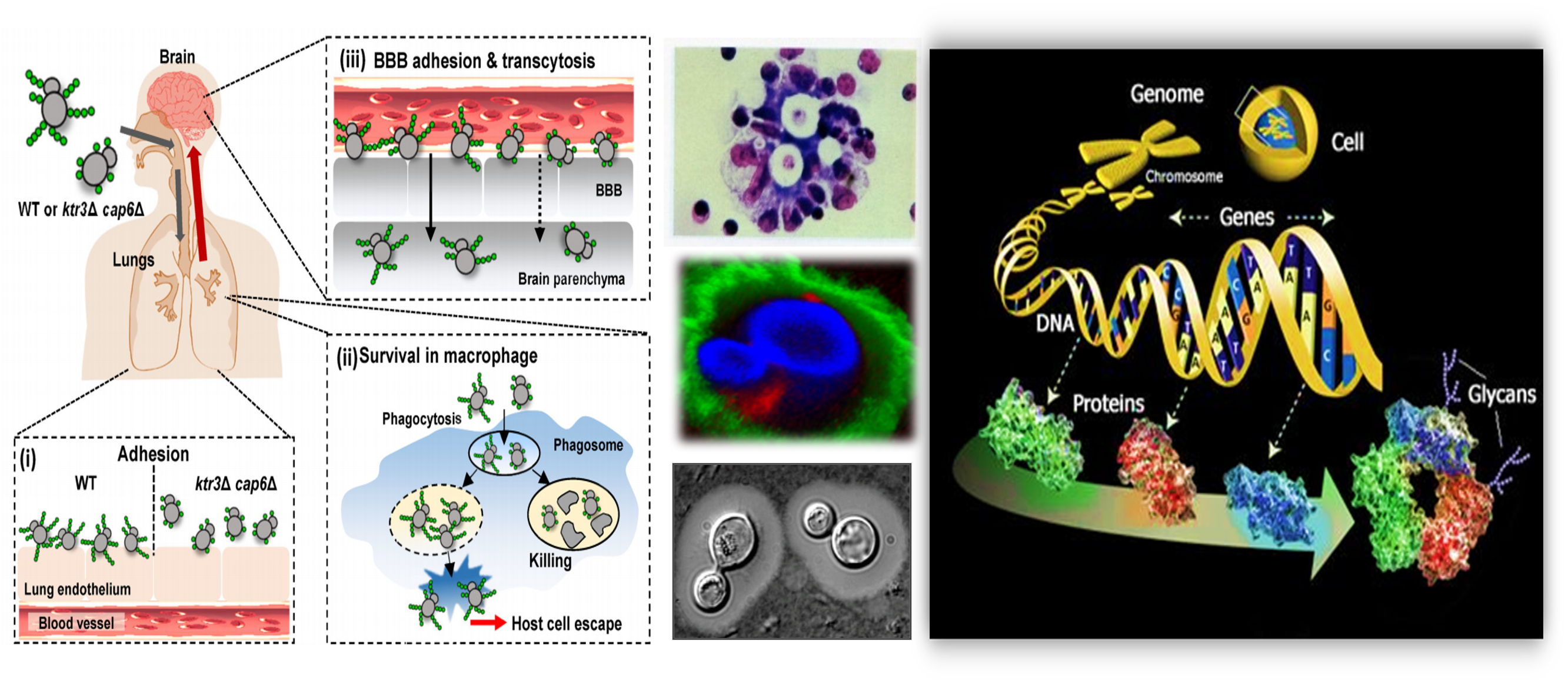
We investigate the function of glycans covalently attached to proteins in the human opportunistic yeast Cryptococcus neoformans and their role on pathogenicity, particularly their role in host-cell interaction and survival in the host environment, with the goal of securing information on next-generation glycan-based antifungals and finding new targets for drug development.
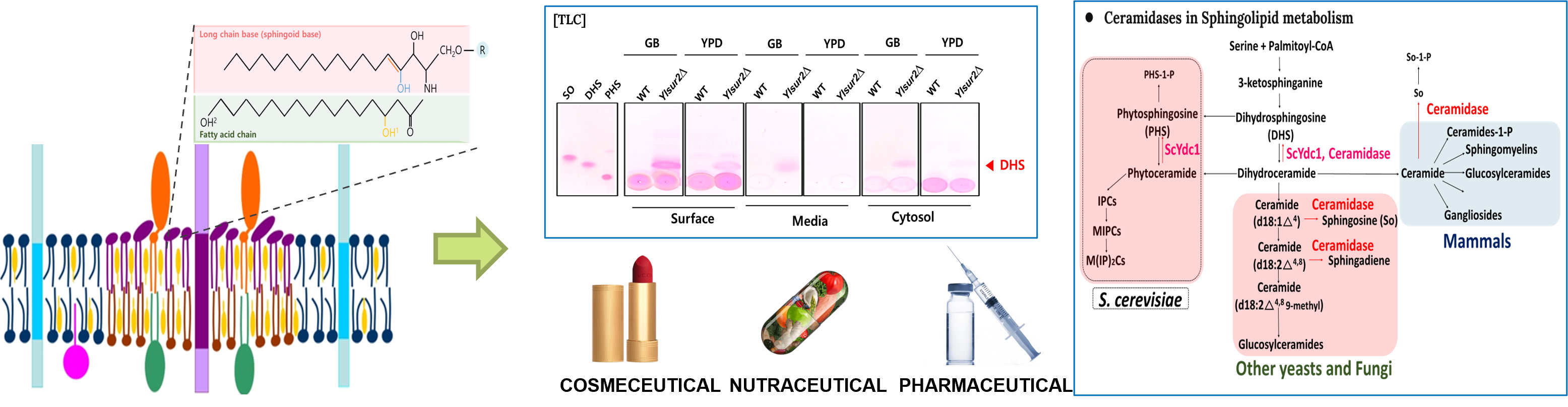
To mass-produce human-type sphingolipids, a basic structure of ceramides, widely used as a skin moisturizing substance, we strive towards identifying the sphingolipid biosynthesis pathway and control network in various yeast species. Using molecular biology techniques such as CRISPR-Cas9, we aim to produce industrial yeasts that can become highly competitive in the pharmaceutical, nutraceutical and cosmeceutical industries.
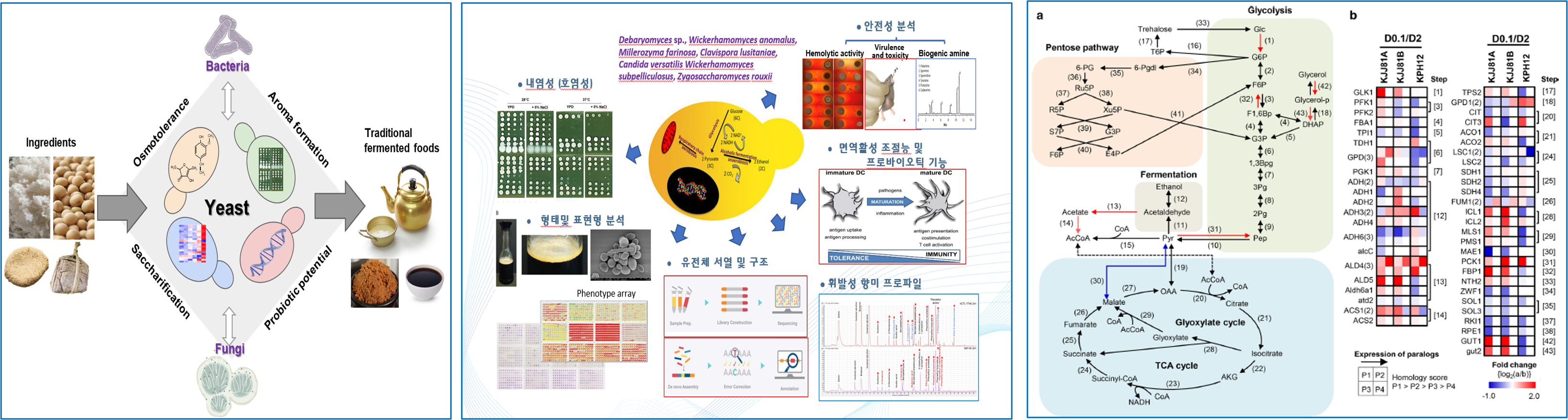
Through an Omics-based approach we perform functional and probiotic activity analysis of various yeast obtained from Nuruk and Meju, used in the manufacture of traditional fermented foods, to develop yeast species producing richer flavors and that are beneficial to the human body.